Punjab Free Solar Panel Program 2026: A Complete Step-by-Step Guide for Households and Farmers
Punjab Free Solar Panel Program
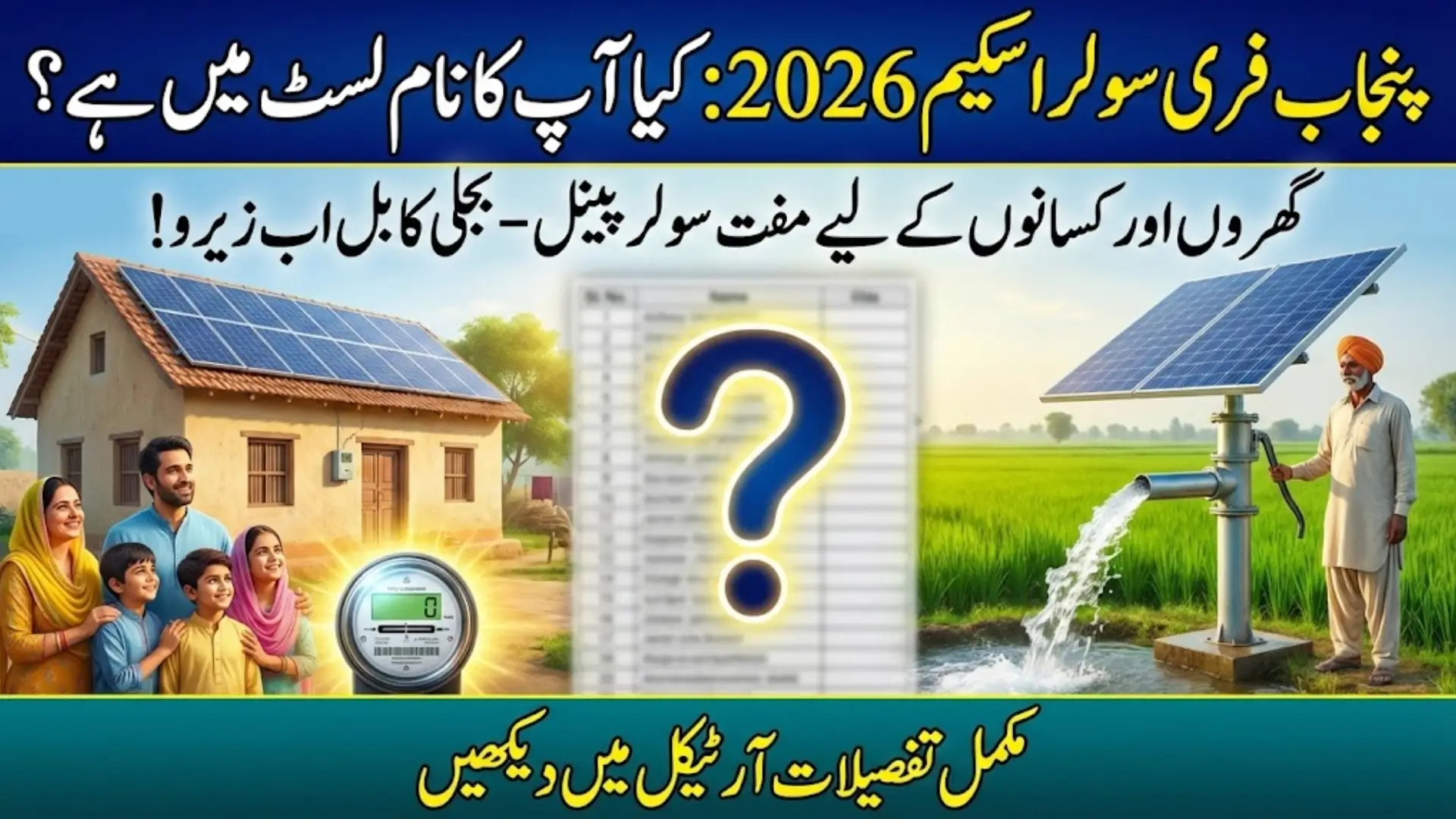
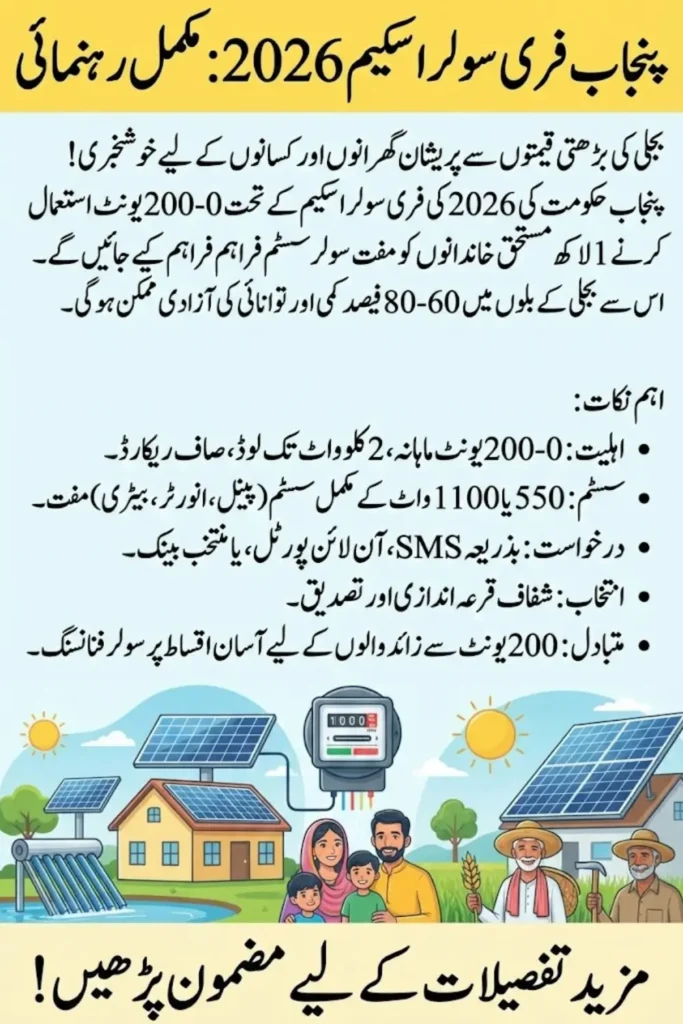
Punjab Free Solar Panel Program Rising electricity prices have made it increasingly difficult for low-income families and small farmers to manage monthly expenses. To address this challenge, the Punjab government has introduced a major relief initiative for 2026 that focuses on clean energy and long-term savings. This program provides free solar energy systems to selected households and agricultural users across Punjab, helping them reduce dependence on expensive grid electricity.
The initiative is designed not only as financial support but also as a move toward sustainable and renewable energy. By shifting homes and tube wells to solar power, the government aims to lower electricity bills, reduce load on the national grid, and promote environmentally friendly solutions.
YOU CAN ALSO READ: Affordable Ownership: How the Honda CD70 Installment Plan from Bank Alfalah Makes a CD70 Possible for Every Budget
Vision Behind the Punjab Solar Energy Initiative
This solar program is part of a broader effort to support energy independence at the household and farming level. It targets families that consume limited electricity and struggle with monthly bills, as well as farmers who rely on tube wells for irrigation.
The government plans to benefit around 100,000 families in this phase. Instead of subsidies or discounts, complete solar systems are provided at zero cost, including equipment and installation. The transparent selection process ensures fairness and equal opportunity for all eligible applicants.
Solar System Capacity and Allocation Criteria
Solar systems are allocated based on monthly electricity usage. The idea is to match system size with actual household needs so that energy is used efficiently and wastage is avoided.
| Monthly Electricity Usage | Solar System Capacity | Key Components Included |
|---|---|---|
| 0–100 Units | 550 Watt System | Panels, inverter, batteries, installation |
| 101–200 Units | 1100 Watt System | Panels, stronger inverter, batteries, installation |
Both system types are designed to cover basic household needs such as lighting, fans, charging devices, and small appliances. On average, beneficiaries can expect a 60–80% reduction in their electricity bills, depending on usage habits.
YOU CAN ALSO READ: BISP 8171 New Card Launch By Government Of Pakistan Full Details, Eligibility and Registration Guide
Who Can Apply for the Punjab Free Solar Scheme 2026
Eligibility is carefully defined to ensure that only deserving households benefit from the program. Applicants must meet all conditions to qualify.
Applicants must be residents of Punjab with a valid CNIC and a household electricity consumption between 0 and 200 units. The approved electricity load should not exceed 2 kW, and the applicant must have a clean payment history with no record of electricity theft. Only one solar system is allowed per household, and those who have already received solar assistance from any government program are not eligible.
Cases That Lead to Disqualification
Certain situations automatically disqualify applicants to maintain transparency and prevent misuse of public funds.
YOU CAN ALSO READ: Small Farmers Loan Scheme 2026 Launch In Pakistan State Bank Issues Complete Details and User Guide
Households involved in electricity theft, those with defective or tampered meters, or homes using multiple meters at the same address are excluded. Applicants with frequent late bill payments or those who have already benefited from previous solar schemes are also not considered.
Three Simple Ways to Apply for the Solar Scheme
The registration process has been made simple and accessible so that people from both urban and rural areas can apply without difficulty.
The first method is SMS registration, where applicants send their electricity reference number along with their CNIC number from their registered mobile phone. A confirmation message is received after successful submission.
The second method is online registration through the official government portal. Applicants enter their CNIC, mobile number, and electricity reference number, upload required documents, and receive a registration number for tracking.
The third option is in-person registration through selected bank branches, where staff assist applicants in completing the process and provide a receipt as proof of submission.
YOU CAN ALSO READ: Ehsaas Program 8171 September 2026 Full Step By Step Guide for Registration and Payments
Selection Method and Installation Timeline
Selection is carried out through a fully computerized balloting system to eliminate favoritism. Successful applicants are informed through SMS and official announcements.
After selection, a physical verification process confirms the applicant’s residence, meter details, and eligibility. Once verified, installation is scheduled. Most installations are completed within a few weeks, and the actual setup usually takes only a few hours. Each solar system is QR-coded and linked to the beneficiary’s CNIC for transparency and tracking.
How Applicants Can Track Their Application Status
Applicants do not need to visit offices repeatedly to check progress. Status updates can be checked using CNIC or electricity reference numbers through the official system.
Applicants can view whether their application is approved, whether they have passed the balloting stage, verification progress, and installation updates. This digital tracking system saves time and reduces unnecessary hassle.
YOU CAN ALSO READ: Breaking News: Apni Chhat Apna Ghar Program Over 755,000 Applications Submitted in Punjab
Option for Households with Higher Electricity Usage
Families that consume more than 200 units per month or those who are not selected through balloting still have an alternative. A solar financing option is available through government-supported banking channels.
This option allows households to install larger systems, up to 5 kW, with a small down payment and easy monthly installments. It provides a practical solution for middle-income families who want to switch to solar energy but are not eligible for the free scheme.
Why This Solar Program Matters for Punjab
This initiative is more than a short-term relief measure. It helps families gain energy security, protects them from rising electricity tariffs, and supports environmental sustainability. For farmers, solar-powered tube wells mean reliable irrigation without fuel or electricity shortages.
Applying for the scheme is a smart decision for eligible households. Missing the opportunity could mean continuing to struggle with high bills, while selected families enjoy long-term savings and clean energy.
YOU CAN ALSO READ: PSER 8070 Ramzan Relief Scheme 2026 Complete Registration and Benefits Guide
FAQs
What is the main purpose of this program?
It provides free solar energy systems to low-income households and farmers to reduce electricity costs and promote renewable energy.
Which households qualify for free solar systems?
Families consuming 0–200 electricity units per month with a clean payment record and approved load of up to 2 kW.
Is the solar system really free?
Yes, panels, inverter, batteries, and installation are provided at no cost.
How are beneficiaries selected?
Through a transparent computerized balloting system.
Can farmers benefit from this program?
Yes, especially through the solarization of tube wells for agricultural use.



What if someone is not selected?
They can still apply for solar financing with easy installments.
YOU CAN ALSO READ: 8171 Online Registration 2026: Step-by-Step Guide for BISP and Ehsaas Financial Support