How RLNG Household Gas Connections Will Transform Pakistani Homes – PM Shahbaz Plan Explained
RLNG Household Gas Connections
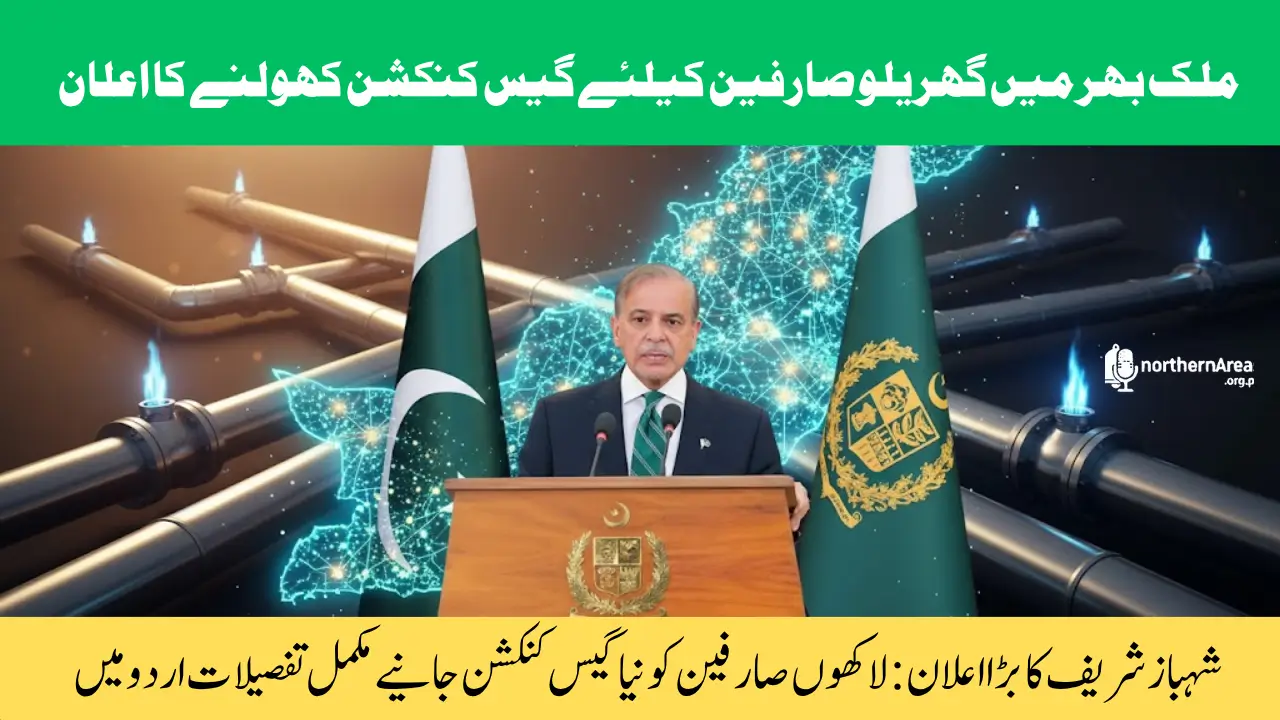
This news is a message of joy for millions of domestic consumers in Pakistan who have been waiting for gas connections for years. Prime Minister Shehbaz Sharif announced the opening of RLNG domestic gas connections across the country, saying that now homes will be provided with quality fuel through regasified liquefied natural gas. This move is a new ray of hope for those areas where pipelines had been laid but gas was not available.
This decision is actually part of the continuity that began during the Nawaz Sharif era, when the country was facing severe load shedding and energy crisis. In 2022, the PDM government took steps to improve the gas supply system despite difficult circumstances, and now this announcement by Shehbaz Sharif has set a new milestone. This is not just a government announcement but the fulfillment of dreams of millions of applicants.


If you want to know what RLNG is, how the system will work, which areas will benefit first, and how domestic consumers will feel about the changes in their daily lives, then read this detailed article. It includes all the information that every Pakistani consumer should know the practical benefits, the government plan, and the interesting facts that make this decision historic.
Why RLNG Household Gas Connections Matter for Pakistani Households
The term RLNG household gas connections refers to domestic gas supply using regasified liquefied natural gas, which is imported LNG converted back to gaseous form and distributed through the national gas network. According to the announcement, this step allows for standard fuel supply to households nationwide, addressing regions that have been waiting for connections despite infrastructures being ready.

For household consumers this means a potential end to reliance on more expensive or less convenient alternatives such as cylinders in areas without piped natural gas. It also ensures access to a recognised network supply rather than piecemeal arrangements and carries the promise of a government-backed rollout, which raises expectations for improved reliability of supply.
While the announcement did not detail exact tariffs or timelines for each area, it emphasised that millions of applications are already logged and that this scheme is a key part of the government’s broader energy policy.

How RLNG (Regasified LNG) Enables Nationwide Household Gas Connections
RLNG or regasified liquefied natural gas is imported in liquid form, transported, then converted back into its gaseous state for distribution. Because Pakistan’s indigenous gas reserves have been under pressure and domestic production limited, RLNG offers a way to expand supply capacity. In effect, the shift to RLNG for household connections enables the government to open new connections where system gas was previously unavailable or the moratorium was in place.
By declaring RLNG household gas connections across the country, the government signals that it will make connections available under this imported-gas channel rather than relying solely on dwindling domestic sources. That means new housing areas, previously unconnected suburbs, and private housing societies might now be eligible. It also means existing system-gas connections are not immediately replaced, but the new roll-out will proceed through the RLNG route.
Timeline and Political Context: From 2013 Load-Shedding to 2022 Challenges to Today
The announcement places itself within a broader political timeline. As noted by Shahbaz Sharif, during the third term of Mian Nawaz Sharif in 2013, Pakistan faced heavy energy shortages and 20-hour load-shedding, particularly for households. In 2022, the PDM government inherited pressure to open new connections amid supply constraints and a backlog of application demands. Today’s decision by Shahbaz Sharif to launch RLNG household gas connections is presented as the culmination of that continuity of effort and public demand.
In short, the policy frames the new roll-out as the next phase in Pakistan’s energy access journey, from widespread outages to infrastructure build-out, and finally opening access through RLNG.
Who Benefits: Millions of Applicants and Regions That Stand to Gain
According to the speech, lakhs of applications have already been received for household gas connections. With the new RLNG household gas connections scheme, those waiting lists, in many cases multi-year backlogs, now have a path forward. The areas that stand to gain include private housing societies and new housing developments where system gas was not previously available, regions nationwide since the announcement speaks of countrywide roll-out for homes, and applicants who had already paid for a demand notice or urgent fee under the previous system.
For many households, access to piped gas may reduce dependence on alternatives like LPG cylinders, which tend to be more expensive or less convenient.
Infrastructure vs Supply: Why Piped Networks Existed But Gas Didn’t
A key statement from the announcement is that the infrastructure, including pipelines and service lines, was already built in many places and even funded. Yet the reason new household connections were not widely available was lack of sufficient supply or a moratorium on new system-gas connections.
By shifting to RLNG for household gas connections, the government aims to overcome the supply bottleneck. The infrastructure becomes usable, and pending applications can move forward. This explains why the announcement emphasises both connections and standard fuel supply. It is not just access, but usable supply that households will now expect.
What the Announcement Means for Everyday Life (Household Level)
For a typical home, the introduction of RLNG household gas connections could bring tangible changes such as reliable access to piped gas for cooking, water heating, and other domestic uses in homes previously excluded. It could reduce cost or improve convenience compared to cylinders, though the announcement emphasises standard fuel rather than cheap fuel. It could also mean less anxiety about securing cylinders, handling logistics, storage, and safety issues associated with alternate fuels, and increased energy security for households during winter or peak usage periods.
However, households should also prepare for changes. New connections under RLNG may come with different tariff structures compared to existing system-gas consumers, and the rollout will take time across regions.
Accountability and Implementation: Questions Raised by the Announcement
While the announcement is positive, several key questions remain for households and policy watchers. What is the timeline for connection activation in each region, urban versus rural, private housing societies versus older developments? What will be the tariff structure for RLNG household gas connections compared to existing gas supply? How will the application backlog be cleared, and what priority categories, urgent or demand-note paid, will be followed? Will households converting from demand-notice status to RLNG status be required to pay extra fees or differential charges? How will supply reliability be ensured across the winter months, especially given prior supply constraints and infrastructure stress?
By raising these questions, households can better prepare and follow the rollout process actively.
Political Reactions and Coalition Credit
In his speech, Prime Minister Shahbaz Sharif congratulated allied parties and the team at Sui Northern Gas Pipelines Limited and other gas utilities for achieving this milestone. The initiative is portrayed not just as an administrative decision but as a fulfilment of long-pending public demand and party commitment. For households, this means the scheme has high political visibility and is likely to receive strong follow-through if implemented properly.




How to Follow Updates (What to Watch Next)
Households and applicants interested in securing RLNG household gas connections should keep an eye on official announcements from gas utilities such as SNGPL and SSGCL and the regulatory body OGRA about demand notices, fees, and conversion options. They should monitor online application portals and mobile apps of the Sui companies, as the government emphasised digital-friendly processing in its rollout plan. Merit lists and priority categories being published by the utilities, regional rollout schedules, and tariff announcements for RLNG-based domestic connections will all be important to track. Monitoring these updates will help applicants stay ahead and prepare for the documentation, fees, and contract formalities required.
Conclusion
The government’s decision to launch RLNG household gas connections marks a pivotal shift in Pakistan’s domestic energy access strategy. By enabling households to receive piped gas via regasified liquefied natural gas, regions previously excluded may finally gain access to standard fuel supply. For millions of applicants this is a moment of hope, but the true impact will depend on timely and efficient implementation, transparent tariffs, and consistent supply. As the rollout begins, households are advised to monitor updates, prepare documentation, and stay informed about their eligibility and fees.