Saudi Tourism Jobs Milestone: 147,000 Opportunities Created for Nationals

Saudi Tourism Jobs
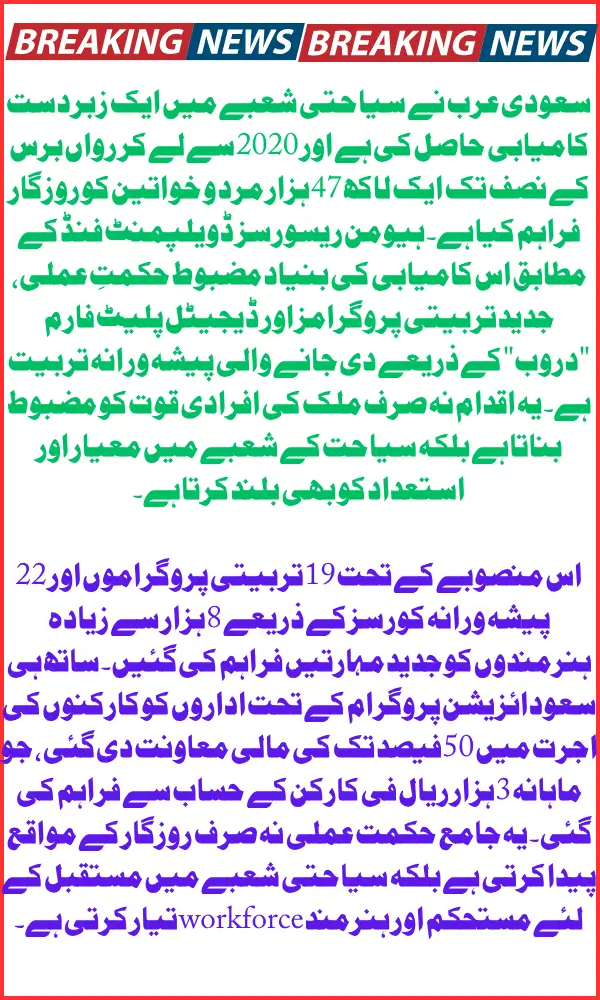
Saudi Arabia has achieved a remarkable milestone in the tourism sector by providing 147,000 Saudi Tourism Jobs to men and women from 2020 to the first half of this year. This announcement was made by the Human Resources Development Fund, highlighting the success of strategic initiatives aimed at creating employment and developing a skilled workforce in the growing tourism industry. The achievement reflects the country’s commitment to boosting national employment while empowering its citizens through targeted training and support programs.
Strategy Behind Saudi Tourism Jobs
The Human Resources Development Fund explained that the rise in employment in the tourism sector is the result of a carefully planned strategy. The strategy focuses on creating jobs while preparing the workforce with the necessary skills to meet the needs of the tourism industry. By combining employment opportunities with structured training, Saudi Arabia has ensured that the workforce is both capable and competitive. This approach not only addresses unemployment but also strengthens the overall quality of service in the tourism sector, which is becoming an increasingly important part of the country’s economy.

Training Initiatives for Saudi Tourism Jobs
Before placing workers in tourism jobs, the development fund launched 19 training programs across various sectors. These programs were designed to provide national workers with modern skills, practical knowledge, and professional development opportunities. The total cost of these programs was 851 million riyals, reflecting the government’s investment in human capital.
The training programs aimed to develop the capabilities of over 8,000 skilled workers. By providing professional and technical training, these initiatives ensured that participants were fully prepared to take on roles in the tourism sector. Workers learned practical skills that are directly applicable to their jobs, helping them deliver higher-quality services and enhancing their career prospects in the long term.

The following table summarizes the training programs and their outcomes:
| Training Programs | Number of Participants | Total Cost | Objective |
|---|---|---|---|
| 19 programs in various sectors | 8,000+ skilled workers | 851 million riyals | Provide modern training and develop professional skills for tourism jobs |
Digital Learning Through Doroub Platform
In addition to in-person training, the Human Resources Development Fund introduced 22 professional courses through the digital platform Doroub. These courses were designed to make learning more flexible and accessible, allowing participants to gain skills at their own pace. The digital courses focused on modern techniques, industry-specific knowledge, and practical applications relevant to tourism.

This approach not only expanded access to training but also ensured that more workers could benefit from professional development, regardless of their location. By combining online learning with in-person programs, the government created a comprehensive system to equip the workforce with the necessary skills for success in the tourism sector.
Impact on Employment Rates
The training and strategic programs have led to significant results in employment. Reports indicate that participation in these initiatives has contributed to a 75 percent increase in employment rates among workers in the tourism sector. This demonstrates the effectiveness of the programs and their ability to prepare a capable workforce that meets industry needs.
The impact of these programs is not limited to employment numbers alone. By equipping workers with new skills and knowledge, the programs have also improved service quality in the tourism sector, making it more competitive and attractive to visitors. The success of these initiatives sets a strong foundation for sustainable growth in Saudi Arabia’s tourism industry.
Saudization Support for Tourism Jobs
To further support employment in the tourism sector, the Saudization program provided financial incentives to institutions hiring Saudi workers. Under this program, institutions received a 50 percent subsidy for worker wages, calculated at 3,000 riyals per worker per month. This financial support helped institutions hire more Saudi nationals while reducing the cost burden of employing trained workers.
The Saudization initiative not only encouraged employers to hire local workers but also strengthened the commitment to providing stable and long-term employment opportunities in the tourism sector. This combination of training, employment, and financial incentives creates a holistic system to promote national employment and workforce development.
The following table summarizes the Saudization program details:
| Program | Incentive Provided | Calculation | Purpose |
|---|---|---|---|
| Saudization in tourism sector | 50% wage subsidy | 3,000 riyals per worker per month | Encourage institutions to hire Saudi workers and provide stable employment |
Conclusion
Saudi Arabia’s tourism sector has achieved a significant milestone by providing 147,000 jobs to men and women from 2020 to the first half of this year. This achievement is the result of a strategic combination of workforce training, digital learning, and financial support for employers. The 19 training programs and 22 professional courses on the Doroub platform ensured that more than 8,000 skilled workers were prepared for employment, while the Saudization wage subsidies encouraged institutions to hire Saudi nationals.





The success of these initiatives demonstrates the country’s commitment to creating sustainable employment opportunities, developing professional skills, and strengthening the tourism industry. By providing structured training and support, Saudi Arabia has not only increased employment rates but also enhanced the overall quality and competitiveness of its tourism sector. These efforts set a strong example of how targeted government programs can create meaningful jobs, empower citizens, and promote economic growth.